A big brand's perfume is usually made by a team. The brand writes a brief, describing what the fragrance should evoke and who it is for. A perfumer, most often from a company such as Givaudan, IFF or Firmenich, writes the formula, an evaluator checks the samples against the brief, and the bottle is drawn by a separate designer or artist. A name next to a bottle doesn't mean that person composed the fragrance.
Culture
Who makes a perfume: the perfumer, the brand's voice and the bottle designer
A brief from the brand, an evaluator nobody has heard of, a perfumer who trains for years, and an artist who never composed a single fragrance.
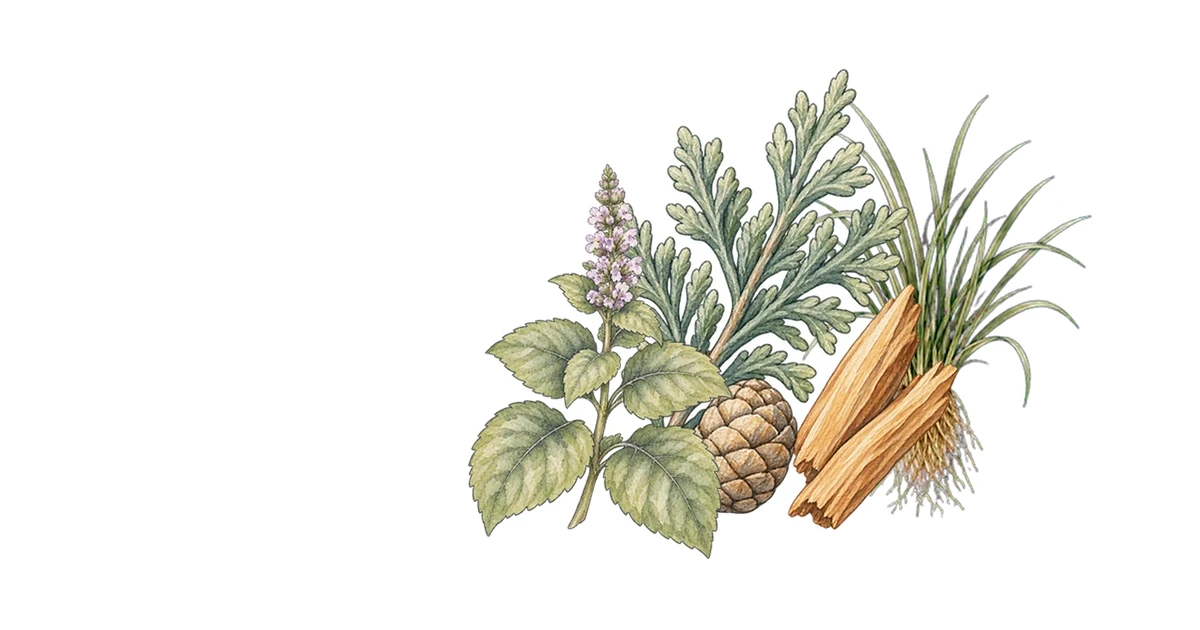
There is usually one name on the bottle, but several people stand behind it, each with their own job: one writes the brief, another the formula, a third draws the glass.
I used to think a perfume was made by one person, the one whose name is on the box. Then I started reading about how it really works, and I counted at least four roles. They are easy to mix up, especially when the name of a famous artist stands next to a fragrance.
The brand's voice and the brief
It all starts, as I now know, not in the lab but with a task. Victoria, the author of the Bois de Jasmin blog, who studied perfumery at the IFF academy, described it in 2012 like this: the brand writes a brief, a description of the project, what the fragrance should evoke and who it should appeal to. It can be a single line about women aged twenty to thirty, or a whole presentation with photographs and films. Before a perfume even has a smell, its idea has usually been worked out by the marketing team. IFRA, the international association of the fragrance industry, also writes that brand owners and fragrance houses work on a scent together.
What the person on the brand side is called depends on the house, so I simply call them the brand's voice. And sometimes they have the last word. The Victoria and Albert Museum's exhibition guide gives an example: when Leonor Fini designed the Shocking bottle, small flowers were added to it on the decision of Schiaparelli's commercial director, and the artist was disappointed. I wrote about this in more detail in the article on Shocking.
The evaluator nobody knows
This was the role I learned about last. Lauren Salisbury, who spent nearly a decade developing fragrances for brands, explains in the same series that the evaluator receives the brief and passes it on to one or several perfumers. The brief includes the maximum cost, material restrictions and deadlines. Then the evaluator smells all the samples, checks them against the brief, picks the best one and sends feedback back to the perfumer, over many rounds. In her words, the press rarely mentions evaluators, even though they can noticeably shape the final fragrance.
The perfumer, the "nose"
The formula is written by the perfumer, and he or she is the person I used to think was the only author. IFRA writes that perfumers train for seven to ten years and memorise thousands of smells, and that even now, with instruments and analysis, every finished formula is still judged by their own nose. Victoria adds an important detail: most perfumers work not for fashion houses but for companies such as Givaudan, IFF, Firmenich, Symrise or Mane, and in 2012 only a few houses, such as Chanel and Hermès, had their own perfumers. A big brand's perfumer, she says, is only one of many people who influence how a perfume will smell.
My favourite example of how these worlds meet is Guerlain. Jacques Guerlain was the perfumer of his own family house and wrote Shalimar. And Thierry Wasser, who became Guerlain's perfumer in 2008, had previously worked at Firmenich, as both researchers from St Petersburg State University and Wikipedia note. I told the story of the house's generations in more detail in the history of Guerlain.
The bottle designer
The fourth person draws the glass, and it isn't necessarily a perfumer. The Shalimar bottle was drawn by Raymond Guerlain, the Shocking bottle by the artist Leonor Fini, and the jeweller René Lalique made more than twenty bottles for François Coty. Their work here is the glass, not the scent: Shalimar was written by Jacques Guerlain, and Fini, according to the house of Schiaparelli, designed the bottle and the packaging. That's why I always check who is credited with what: if an artist's name stands next to a perfume, it doesn't mean they ever sat at a desk full of little bottles of raw materials.
What follows from this
The name on the label tells only part of the story. The author of Bois de Jasmin writes that perfumers were long kept in the shadows, and that Frédéric Malle began putting their names on the bottles when he launched his Editions de Parfums. I like that I can find out who they are now, and I make use of it. Next time you fall in love with a fragrance, try to find out who wrote it and who drew the bottle, and note it in your diary in Le Sillage. In a year, you'll have your own list of favourite authors, and it will be more accurate than any ranking.
SOURCES
1. IFRA: How is fragrance made
2. Bois de Jasmin, 2012: How Many Hands Touch Your Bottle of Perfume, Brief
3. Bois de Jasmin, 2013: How Many Hands Touch Your Bottle of Perfume, The Evaluator
4. Bois de Jasmin, 2013: How Many Hands Touch Your Bottle of Perfume, Perfumers
5. Schiaparelli, архив дома: Schiaparelli "Shocking" perfume bottle
6. V&A: Schiaparelli, Fashion Becomes Art, путеводитель по выставке
Checked on November 27, 2026.