René Lalique was a renowned jeweller when, in 1907, he met the perfumer François Coty. In 1908, Coty commissioned his first bottles, the first being Cyclamen, and in all Lalique designed more than twenty bottles for Coty. Later he also made empty bottles for sale, such as Clairefontaine of 1931, which was not created for any particular fragrance.
Culture
René Lalique: when a perfume bottle becomes a work of art
Meeting François Coty, the first Cyclamen bottle, a glassworks of his own and Clairefontaine, a bottle with no fragrance of its own.
A jeweller who one day turned to glass made the perfume bottle into an object in its own right, one people bought even empty.
For a long time, I thought a bottle was simply a vessel you fill with the thing you actually bought it for. Then, in a museum catalogue, I saw a little glass vase with four sprigs of lily of the valley that had no fragrance of its own, and I realised it can work the other way round.
A jeweller first
René Lalique was born in 1860 and started not with glass, but with jewellery. The Lalique Museum writes that at the 1900 Exposition Universelle in Paris he was at the height of his fame as a jeweller, and that Émile Gallé called him the inventor of modern jewellery. His brooches and pendants already used glass, alongside horn, enamel and stones, so he did not come to perfume bottles empty-handed.
Meeting Coty
According to the museum, in 1907 Lalique met the perfumer François Coty. From here, the Victoria and Albert Museum's catalogue entry is the best guide: in 1908, Coty first commissioned bottles from Lalique, the first was for the perfume Cyclamen, and the first batch was made at the Baccarat works. The Lalique Museum adds that, over the years, Lalique designed some twenty or more bottles for Coty, and that a conflict later ended their partnership.
The Lalique Museum believes that, at that moment, the bottle for the first time gained a direct symbolic link with its perfume, and I understand what it means. If there's a flower on the stopper and a fragrance of that name inside, the bottle starts speaking before you even open it.
A glassworks of his own
On the strength of Coty's orders, Lalique built his own production. In autumn 1908, according to the V&A, he rented a glassworks at Combs-la-Ville, and in 1913 he bought it, which the Lalique Museum also confirms. The museum explains why: he wanted to make things in larger quantities, so that they would be cheaper and more widely affordable. For me, that's the real turning point of the story. A jeweller whose clients, the museum says, included Sarah Bernhardt and the collector Calouste Gulbenkian started thinking about his glass standing on many dressing tables.
Clairefontaine, a bottle without a fragrance
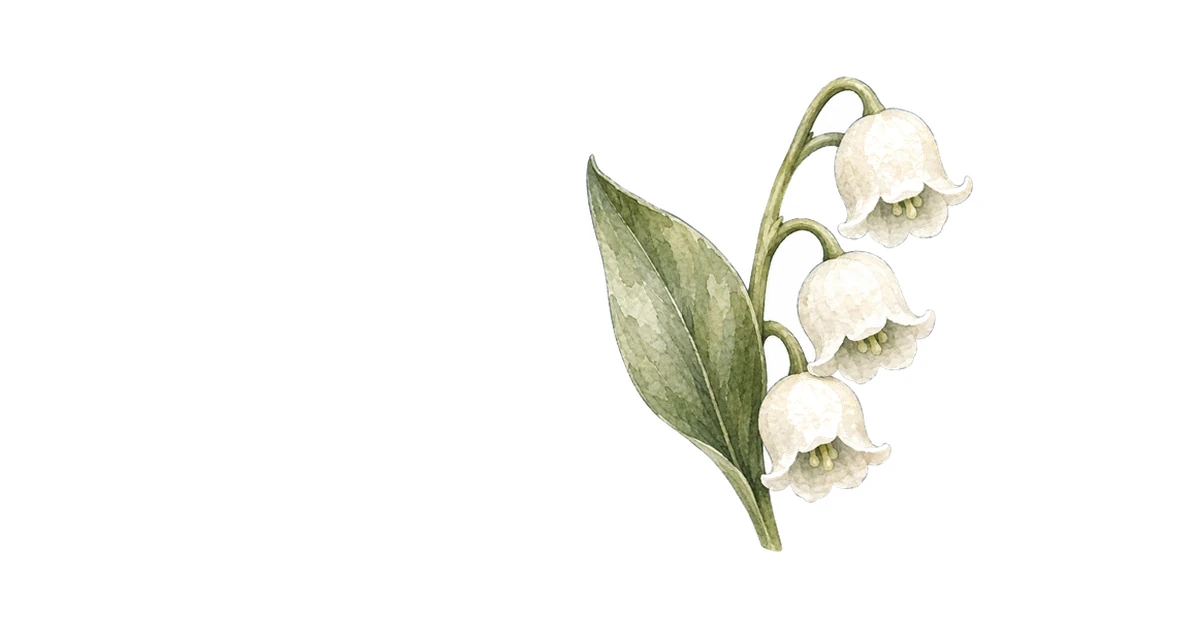
My favourite example dates from 1931. The Clairefontaine bottle looks like a vase holding four sprigs of lily of the valley. The Lalique Museum says plainly that it was not made for any particular perfume: it could be filled with whatever fragrance the customer wanted. Lalique also made bottles like this, empty, to be sold in his own and other shops.
Where the name comes from, even the museum doesn't know for sure. In 1898, Lalique bought a property at Clairefontaine near Paris and set up a workshop there, and the museum cautiously suggests that the bottle's name came from it. I like that caution, and I repeat it here without any extra certainty.
What follows from this
That's why Clairefontaine has no notes, and you won't find a pyramid for it in our atlas. It's an object in its own right, not packaging. That's its whole charm. If this side of perfume interests you, read the story of the Shocking bottle, drawn by an artist, and of the Shalimar bottle with its blue Baccarat crystal stopper. And in Le Sillage, you can build your own fragrance wardrobe and mark which bottles truly matter to you.
SOURCES
1. Musée Lalique: René Lalique
2. Musée Lalique: Clairefontaine bottle
3. Musée Lalique: L'Effleurt bottles for Coty
4. V&A: Cyclamen, scent bottle designed by René Lalique, 1909
Checked on November 27, 2026.