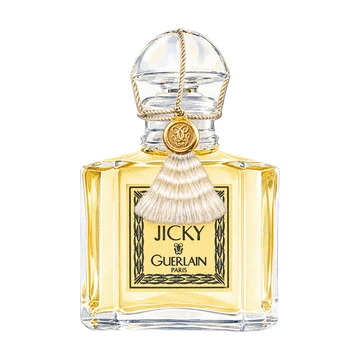
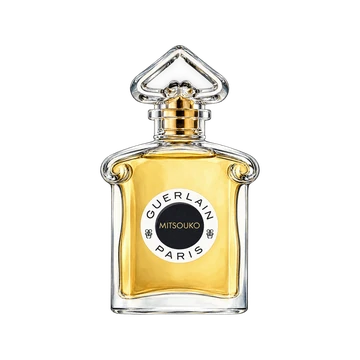
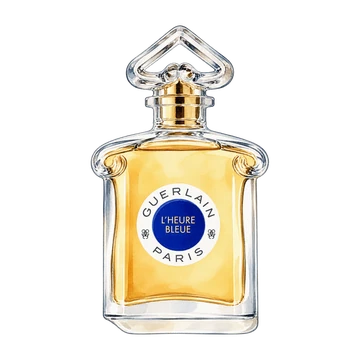
The house of Guerlain was founded in Paris in 1828 by Pierre-François-Pascal Guerlain. His son Aimé created Jicky in 1889, his grandson Jacques composed Après l'Ondée, L'Heure Bleue, Mitsouko and Shalimar, Jacques's grandson Jean-Paul worked until the early 2000s, and since 2008 the house perfumer has been Thierry Wasser. A good order to get to know the house: Jicky, Après l'Ondée, Mitsouko, Shalimar, Samsara.
Culture
Reading Guerlain's history through its fragrances
From a shop on the rue de Rivoli to Samsara: four perfumers of the Guerlain family and a short list of where to start.
You can read Guerlain's history by dates, or by bottles: every generation of the family left a fragrance that is still on the shelves today.
For a long time, I knew Guerlain only as the name on the Shalimar box. Then Jicky and Mitsouko arrived on my shelf, and I noticed that they talk to each other across the decades. That's how I started reading the history of this house not by years, but by fragrances.
A shop on the rue de Rivoli
It all began in 1828, when Pierre-François-Pascal Guerlain, a perfumer and chemist, opened his first shop in Paris, at 42 rue de Rivoli. Both LVMH, which owns the house today, and researchers from St Petersburg State University write about it. The high point of his life came in 1853: for the wedding of Napoleon III and Eugénie, he created Eau de Cologne Impériale and gave it to the bride. This cologne isn't in our atlas yet, but it's a good place to start the story, because from then on the house was handed down like a family craft.
Aimé and Jicky
After the founder's death in 1864, the business passed to his sons: Gabriel ran the company, and Aimé became the perfumer. In 1889, Aimé created Jicky, and it is still made today. The St Petersburg study and Wikipedia both call it one of the first fragrances in which natural materials were joined by synthetic ones. There are two stories about the name: either it was the family's name for Aimé's nephew, the future perfumer Jacques, or it was the name of a girl who broke Aimé's heart while he was studying in England. Which one is true, nobody can say any more, and I wear Jicky without choosing between them.
Jacques, the longest generation
Aimé's nephew, Jacques Guerlain, Gabriel's son, wrote so many classics for the house that it almost seems too much for one person. Après l'Ondée came out in 1906, L'Heure Bleue in 1912, Mitsouko in 1919, and in 1925 came Shalimar, which I wrote about in a separate article. In 1933, Jacques released Vol de Nuit, a tribute to Antoine de Saint-Exupéry's novel "Night Flight". When I smell these fragrances one after another, I feel as if I'm leafing through one person's diary over thirty years.
Jean-Paul
Jacques's grandson, Jean-Paul Guerlain, gave the house Chant d'Arômes in 1962 and Samsara in 1989. He turned out to be the last perfumer of the house from the Guerlain family. In 2008, the Swiss perfumer Thierry Wasser became Guerlain's perfumer, and LVMH today calls him the heir to everything the house has gathered over its history.
A birth date is not the bottle on the shelf
Here, I always add one caveat. The year next to a name tells you when a fragrance was born, not what is in the bottle today. As far back as 2008, The New York Times wrote that the classic Shalimar formula had been updated with new materials. So the pages in our atlas describe the versions sold now, not the ones people smelled in the year they were born.
Where to start
If you want to get to know the house in five samples, I would go in this order: Jicky, Après l'Ondée, Mitsouko, Shalimar and Samsara. That's three generations of the family and five different moods, and exactly a hundred years between the first and the last. It's handy to save them straight away to the "Want to try" shelf in Le Sillage, and then note which one you wanted to wear again.