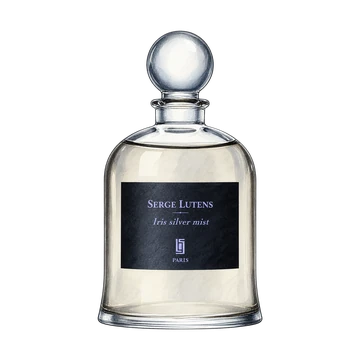
The iris scent in perfume comes from the rhizome, not the flower. After two to three years in the field it is stored for another three to five years, while odourless compounds in it oxidise into irones, the molecules we smell as iris.
Composition
Iris: the flower that smells of its root
Why the most powdery scent in perfumery is dug out of the ground, and why it takes so long to wait for.
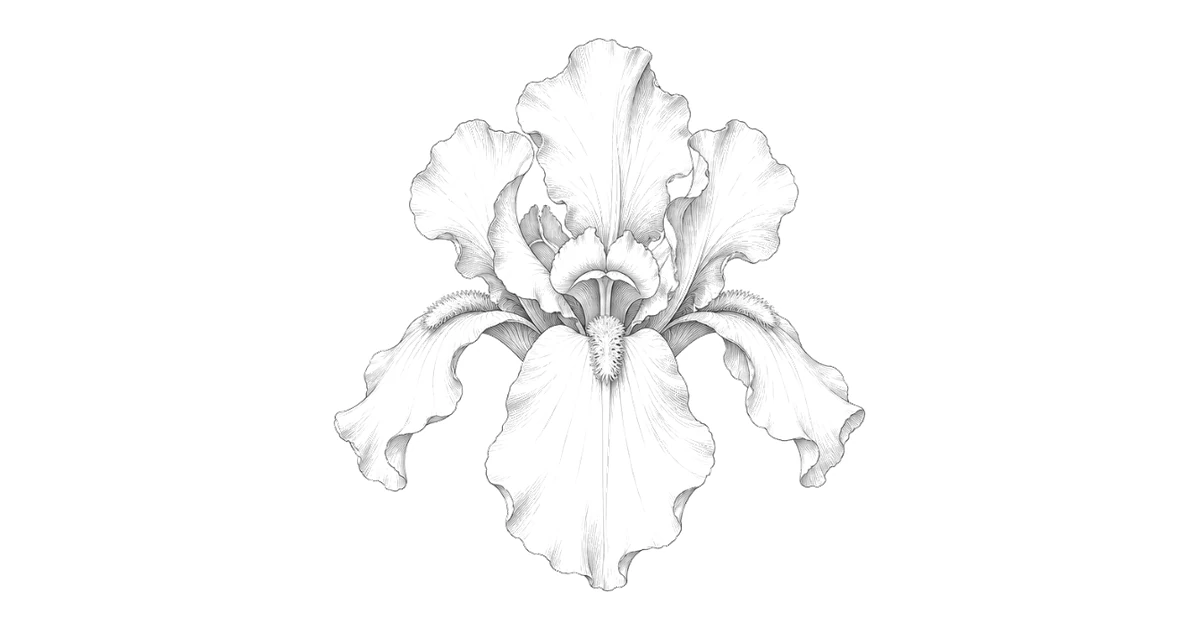
The iris in perfume comes not from the petals but from the root, and that root spends years growing, then years lying in a shed, before it has any scent at all.
For a long time I was sure that iris smelled of lilac silk, of cold water standing in a vase. Then I put a real iris perfume on my wrist for the first time and smelled something else entirely: dry powder, the earth on a carrot, and the coolness of an old wardrobe, full of ironed linen, that smells of somebody else's house. There is almost no flower in that scent, and for years, I admit, I held it against the iris.
A scent from the ground
Perfumers do not work with the flower, but with its rhizome, the root. According to a Givaudan patent, the roots grow in the field for two or three years. Then they are dug up and stored, at room temperature, for another three to five years. Only after that, when the waiting is over, are they steam-distilled into a thick, waxy oil, which the trade simply calls butter. I picture those years in the shed as a long wait for a letter, one that someone is writing slowly, by hand, with no rough drafts.
Why it takes so long
Over those years, large odourless molecules, called iridals, build up inside the root. While the root lies in a well-aired room, they slowly oxidise into irones, and the irones, not the petals, are what we smell as iris. The patent says that good orris butter holds fifteen to thirty percent irones, depending on the quality of the roots. Since I learned this, I smell my own hands differently after wearing iris, because that powder holds several years of patience, a patience that neither you nor I ever asked anyone for.
The yield is tiny. Even in the patent's most generous example, a kilogram of butter takes more than a hundred kilograms of dried roots. Raw material sellers quote forty to a hundred thousand euros a kilogram, depending on origin and age. I won't compare that with gold, because gold costs something different every day, but I no longer flinch at the price of a bottle that truly holds a lot of iris, and I suspect, after this, you won't either.
The linen cupboard
This iris is grown in Tuscany, on small farms, on the hills around Florence and in Chianti. Serge Lutens opens its description of Iris Silver Mist by recalling that, in Tuscany, iris roots were long placed in linen cupboards. I like that detail more than any pyramid of notes, top, heart or base. It explains why iris feels so clean and yet so close, like a pillowcase, still a little warm, that someone slept on before you.
I wear Iris Silver Mist on cold days, when I want the collar of my sweater to smell of something strict, grey, a little aloof. For the first few minutes it is almost prickly, dry and metallic. Then, slowly, it settles on the skin as powder. All day I keep raising my wrist to my cheek, even though it is not a tender scent and promises nothing, and by evening I am always a little sorry that it has left my collar and stays, faintly, only on my scarf.
How to recognise it
If you want to hear the iris, look in a perfume not for floral sweetness, but for dryness, powder and a faint smell of earth. That is how your hands smell after peeling carrots in a cold kitchen. That is the root, and the flower, pretty as it is, stays in the picture. I still don't know why I feel so calm near this scent, even though, every time, it smells of someone else's linen.