The letters EDT and EDP don't guarantee that you are looking at one composition in two dilutions. Versions with the same name can differ in emphasis. Philosykos is a concrete example of such a difference.
Practice
EDT and EDP: more than a matter of concentration
One name, two descriptions, and a reason to look past the three letters on the bottle.
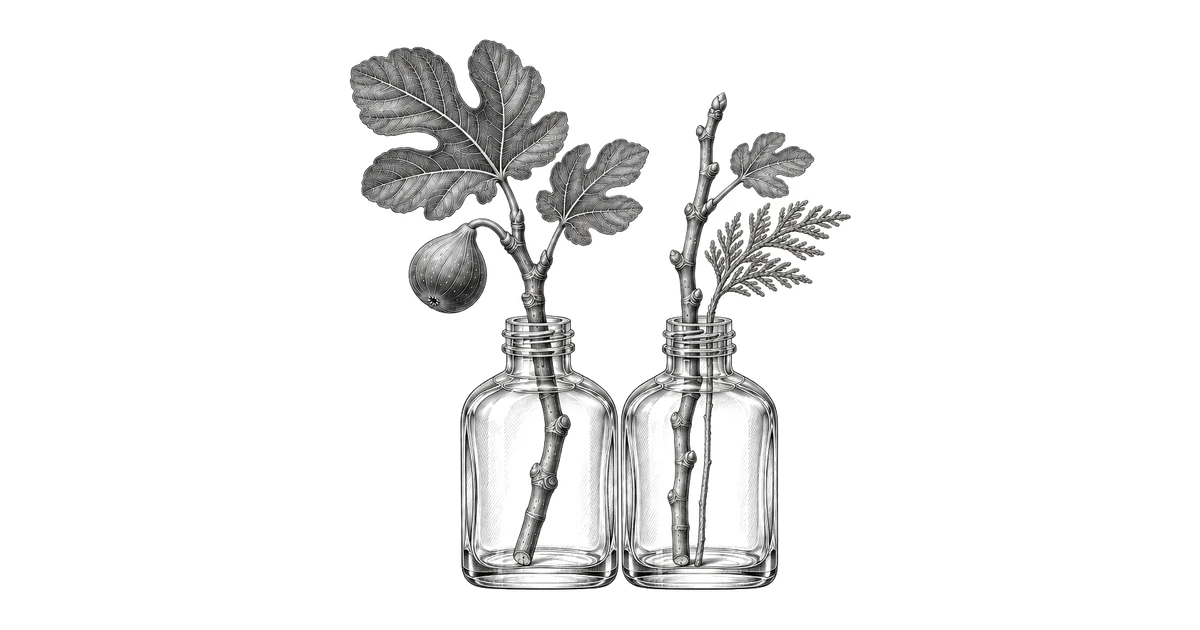
The two versions of Philosykos share a name and a list of notes, yet they tell of different hours of the same summer, and the three letters on the bottle won't explain the difference.
For years, I thought an eau de parfum was simply a thicker eau de toilette, like wine from the same grapes, only left longer in the barrel. I was wrong. The three letters on the bottle push you towards exactly that idea. Brands, for their part, are rarely in a hurry to correct us, because concentration is easier to explain than character. Philosykos by Diptyque explained the difference to me better than any article, although all I did was lay its two descriptions side by side.
One tree, two summers
In Greek, the name means "friend of the fig tree". The brand draws both versions from one memory: a summer on Mount Pelion, where, to reach the sea, you crossed a grove of wild fig trees, baking in the sun. I know that path, not from Greece but from every southern shore I have known, where you walk down to the water in a swimsuit under a sundress. The branches catch at your shoulder and leave a sticky green scent on your skin.
For the Eau de Toilette, Diptyque writes about the entire tree: the freshness of the leaves, the milky flavour of the fruit, the density of the white wood. In the Eau de Parfum, the brand writes, the fruit withdraws, while white cedar heightens the strength of the trunk and the smell of bark baking under the midday sun. This is where I stop thinking about concentration and start thinking about the time of day.
To me, the first version is morning, when the figs are still cool, and you eat them with your hands, right by the tree. The second is three in the afternoon, when, even in the shade, there is no air left. At that hour, you want to press your cheek against a warm wall, just to feel that it is alive.
EDT
Leaf. Fruit. Wood.
Diptyque describes the Eau de Toilette as the whole fig tree.
Diptyque descriptionEDP
Cedar. Wood. Bark.
In the Eau de Parfum, white cedar brings out the woody character.
Diptyque descriptionWhat hides in the list of notes
The funniest part is hidden in the notes. The list is the same on both pages, word for word: fig leaves, fig tree sap, fig tree wood and black pepper. The cedar, which the brand describes so beautifully for the Eau de Parfum, is not on that list. I don't know whether it hides inside the word "wood" or lives only in the copy. Since then, though, I've stopped treating a list of notes as a fragrance's passport.
What the letters won't tell you
Neither the description nor the three letters will tell you how long the scent will last on your skin. Nor will they tell you which version will turn out to be yours. I don't give them longevity scores, because the only honest way to measure that is on yourself, and by evening my skin behaves nothing like yours.
How to choose between them
If you like both, don't wear them on the same day, one on each wrist. By lunchtime, you'd be smelling not the tree, but your own confusion. Wear the Eau de Toilette one day and the Eau de Parfum on another, in the evening smell your shirt collar, where scent lives longer than on skin, and simply remember which one you wanted to come back to.
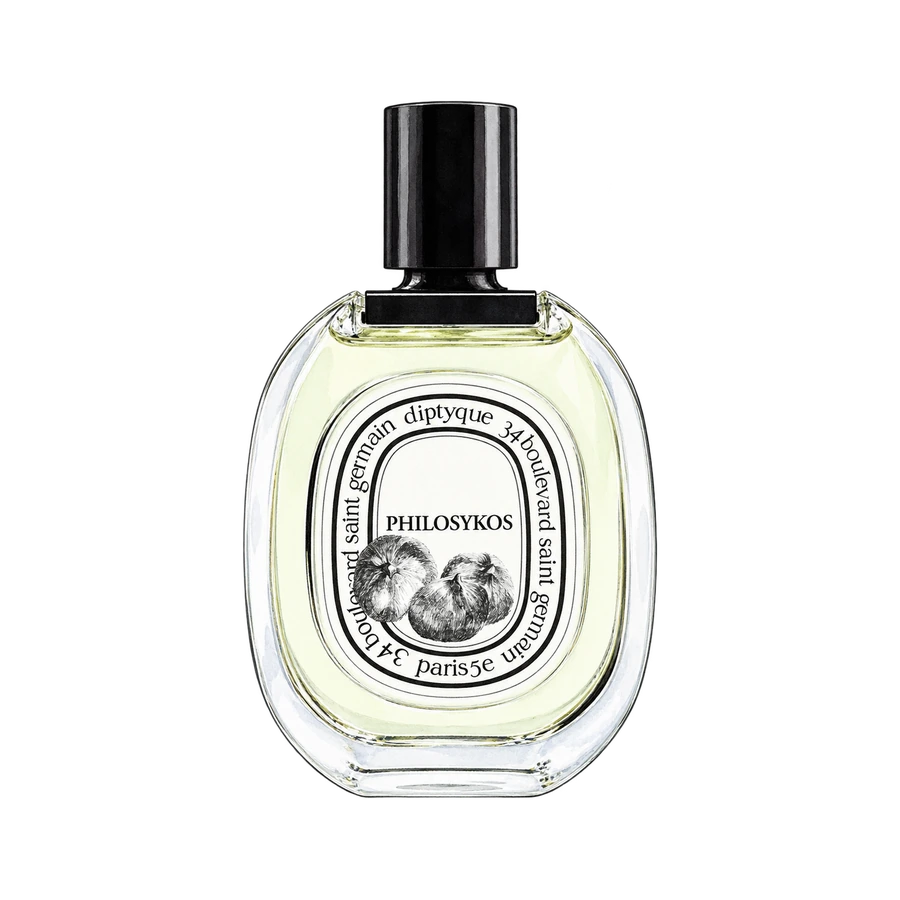
FRAGRANCE IN THIS ARTICLE
Philosykos
Diptyque · Eau de Toilette
SOURCESChecked on October 30, 2026.